Have you ever wondered whether Labeller or Labeler is the correct spelling? You may have seen both forms in articles, product descriptions, technical manuals, and everyday writing. Although the two words look slightly different, they generally have the same meaning. The main difference comes from American English and British English spelling conventions.
In American English, labeler is the standard spelling. In British English, labeller is commonly preferred. Both words can describe a person, machine, or device that applies a label to something. The spelling difference also appears in related forms, such as labeled and labelled, or labeling and labelling.
Understanding this distinction can help you maintain consistent spelling, especially when writing for a specific audience. A US-focused article will normally use labeler, while content written in British English will generally use labeller.
Throughout this guide, you’ll learn the difference between labeler and labeller, why the extra l appears, how each spelling is used, and which form fits different varieties of English. You’ll also see practical examples and related word forms that make the distinction much easier to remember.
Is It Labeller or Labeler?
Both labeller and labeler are established English spellings. The choice usually depends on whether you’re writing in British or American English.
Labeler in American English
Labeler is the standard form commonly used in American English.
The word refers to someone or something that puts a label on an object. A labeler can be a person working with products, files, packages, or other items. It can also refer to a machine designed to apply labels.
For example:
- The labeler placed a barcode on every package.
- The factory purchased a new bottle labeler.
- The worker operates the automatic labeler.
- The software helps each labeler organize product information.
The spelling uses a single l before the -er ending:
label + er = labeler
American English also commonly uses:
- labeled
- labeling
- labeler
That creates a consistent American spelling family.
Labeller in British English
Labeller is the standard form used in British English.
It has the same meaning as labeler. The main difference is the additional l before the -er ending.
Examples include:
- The labeller applies stickers to each container.
- The company installed an automatic labeller.
- The warehouse uses a barcode labeller.
- The machine works as a high-speed bottle labeller.
The British spelling follows the pattern:
label + ler = labeller
The related British forms generally include:
- labelled
- labelling
- labeller
So if your document follows British English, keeping the double l throughout the word family makes the spelling consistent.
Quick Comparison: Labeller vs. Labeler
| Feature | Labeler | Labeller |
| Main variety | American English | British English |
| Meaning | Someone or something that labels | Someone or something that labels |
| Pronunciation | Essentially the same | Essentially the same |
| Extra consonant | One l | Two ls |
| Common past form | labeled | labelled |
| Common -ing form | labeling | labelling |
| Best choice for US content | Yes | Usually no |
| Best choice for UK content | Usually no | Yes |
Neither word has a different definition simply because it has one more l.
The spelling signals the variety of English being used.
What Does Labeler or Labeller Mean?
Before looking at spelling rules, it helps to understand exactly what the word means.
A labeler or labeller is generally a person or device that labels something.
The underlying verb is label.
To label something means to attach, write, print, or assign identifying information to it. Depending on the context, a label might contain a name, barcode, description, warning, category, price, or other information.
Labeler as a Person
A labeler can refer to a person who applies labels.
For example:
The labeler checked each package before shipping.
Here, the word identifies a person performing the action.
Another example:
The warehouse hired a labeler to prepare outgoing packages.
The person’s job involves labeling products or packages.
Labeler as a Machine
In manufacturing and packaging, labeler can also refer to machinery.
For example:
The automatic labeler can process thousands of containers per hour.
Here, labeler doesn’t describe a person. It describes equipment that performs the labeling process.
This distinction matters because English frequently uses -er nouns for both people and things that perform an action.
Consider these related examples:
- teach → teacher
- print → printer
- scan → scanner
- package → packager
- label → labeler
The exact technical meaning can vary by industry, but the basic idea remains the same: something or someone performs the action.
Labeller Has the Same Basic Meaning
The British spelling labeller works in exactly the same way.
For example:
The labeller applies a product sticker to each bottle.
The spelling is different. The underlying meaning isn’t.
In British technical writing, labeller can describe equipment used in packaging, manufacturing, pharmaceutical production, food processing, and other industries.
Why Are There Two Different Spellings?
The difference between labeler and labeller isn’t a difference in pronunciation or meaning. It reflects a broader difference between American and British spelling conventions.
English developed through centuries of use across different regions. American English later developed its own spelling preferences, while British English retained or developed different conventions in many words.
The result is a language with multiple accepted regional standards.
You can see this in familiar pairs such as:
- color / colour
- center / centre
- traveled / travelled
- canceled / cancelled
- labeled / labelled
- labeling / labelling
- labeler / labeller
Not every spelling difference follows exactly the same rule. That’s important.
English spelling contains many historical patterns, exceptions, and regional conventions. Therefore, it’s better to understand labeler/labeller as part of a spelling family rather than treating one simple rule as universal.
How the Word Is Formed
The base word is label.
The word label can function as both a noun and a verb.
As a noun:
The label contains the product’s ingredients.
As a verb:
Workers label each package before shipment.
When the -er suffix is added, it can form a noun referring to someone or something that performs an action:
label → labeler/labeller
The spelling then follows the regional convention being used.
The Consonant-Doubling Difference
The extra l in labeller is part of a broader British spelling pattern.
Compare:
American English
- labeled
- labeling
- labeler
British English
- labelled
- labelling
- labeller
The difference becomes especially noticeable when suffixes are added.
American English often keeps the single l in words such as labeled and labeling. British English commonly doubles the l in these forms.
However, this doesn’t mean that British English simply doubles every final consonant in every word. Spelling rules depend on the word, its pronunciation, its structure, and historical convention.
That’s why it’s better to learn the complete word family.
Why Both Spellings Are Standard
Language isn’t governed by one worldwide spelling authority.
English has established regional standards. Major dictionaries and style guides document differences between varieties such as American and British English.
For example, resources from Merriam-Webster are particularly useful for American English, while Cambridge Dictionary and the Oxford English Dictionary provide broader English usage information.
The important lesson is this:
A regional spelling difference doesn’t automatically make one form incorrect.
A US publication may deliberately use labeler. A UK publication may deliberately use labeller. Each is following a different spelling convention.
The Grammar and Spelling Rule Behind Labeler vs. Labeller
The difference is primarily a spelling convention, not a grammar difference.
Both forms can perform the same grammatical role in a sentence.
American English: Labeler
American English commonly uses:
- labeler
- labeled
- labeling
Examples:
The labeler is ready for the next shipment.
The company labeled every box before delivery.
The workers are labeling the containers.
Notice how the single l remains throughout these forms.
British English: Labeller
British English commonly uses:
- labeller
- labelled
- labelling
Examples:
The labeller is ready for the next shipment.
The company labelled every box before delivery.
The workers are labelling the containers.
The extra l appears in the relevant forms.
Why the Related Words Matter
A common mistake is to learn only one word and forget about the rest of the word family.
Suppose a US company writes:
Our labeler is designed for high-speed labeling.
That combination is consistent with American spelling.
A British company might write:
Our labeller is designed for high-speed labelling.
That combination follows British spelling.
Problems arise when a document mixes the conventions without a reason:
Our labeller is designed for high-speed labeling.
The sentence isn’t impossible to understand. However, it combines British labeller with American labeling.
In professional writing, consistency usually makes the text cleaner and easier to edit.
A Simple Memory Trick
If you’re writing for a US audience, remember:
US English → labeler
If you’re writing for a UK audience, remember:
UK English → labeller
You can also connect the forms:
American: labeler → labeled → labeling
British: labeller → labelled → labelling
This isn’t a universal rule for every English word. It’s simply an easy way to remember this particular spelling family.
Read More: Height vs Hight: Meaning, Spelling, Differences, and Correct Usage
Labeler vs. Labeller Examples
Seeing the words in context makes the distinction much easier.
Examples With “Labeler”
Here are natural examples using labeler in American English:
- The automatic labeler applies stickers to each bottle.
- The warehouse purchased a faster labeler.
- The operator inspected the labeler before starting production.
- The labeler prints product information directly onto adhesive labels.
- Each package passes through the labeler before shipping.
- The technician repaired the machine’s labeling mechanism.
- The company uses an industrial labeler for large orders.
In each sentence, labeler can refer to equipment or a person depending on the context.
Examples With “Labeller”
Here are equivalent examples using labeller:
- The automatic labeller applies stickers to each bottle.
- The warehouse purchased a faster labeller.
- The operator inspected the labeller before starting production.
- The labeller prints product information onto adhesive labels.
- Each package passes through the labeller before shipping.
- The technician repaired the labeller.
- The company uses an industrial labeller for large orders.
The meaning remains essentially unchanged.
The spelling changes because the regional convention changes.
Side-by-Side Sentence Comparison
| American English | British English |
| The labeler applies the sticker. | The labeller applies the sticker. |
| We bought a new labeler. | We bought a new labeller. |
| The labeler needs maintenance. | The labeller needs maintenance. |
| The company uses automated labeling. | The company uses automated labelling. |
| The products were labeled yesterday. | The products were labelled yesterday. |
This table reveals an important point: the regional spelling difference extends beyond labeler and labeller.
Related Words: Label, Labeled, Labelled, Labeling, Labelling
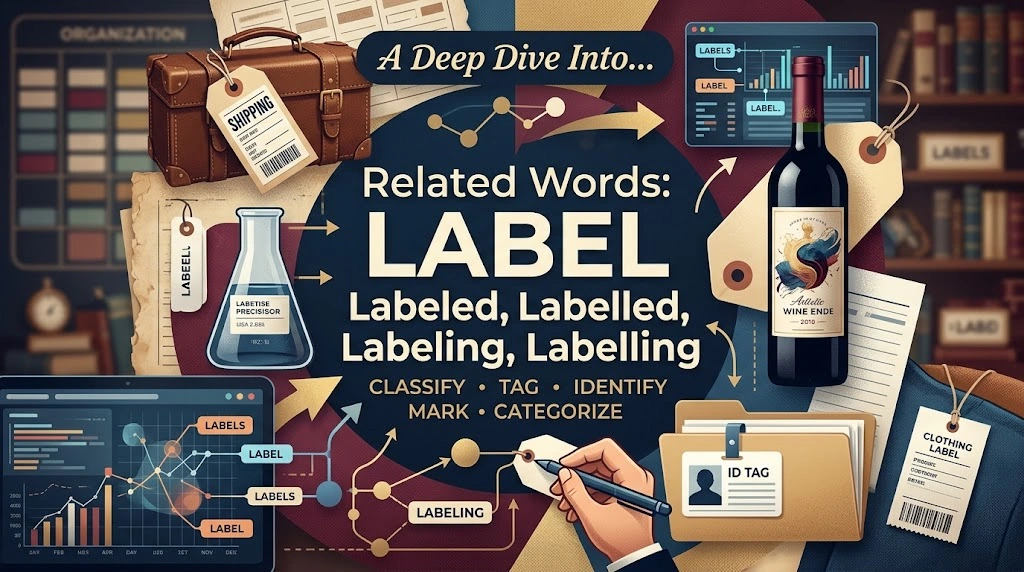
Understanding the complete word family helps you avoid inconsistent spelling.
Label
Label is the base word and works in both American and British English.
As a noun:
Read the label before opening the package.
As a verb:
Workers label each container by hand.
The spelling label itself doesn’t create the same regional difference.
Labeled vs. Labelled
This is one of the most common related differences.
Labeled is the usual American spelling.
The boxes were labeled by category.
Labelled is the usual British spelling.
The boxes were labelled by category.
Both forms are the past tense and past participle of label.
Labeling vs. Labelling
The same distinction appears with the -ing form.
American English:
The company is labeling the new products.
British English:
The company is labelling the new products.
Again, the meaning doesn’t change.
Labeler vs. Labeller
The noun follows the same regional pattern:
American: labeler
British: labeller
The following table brings the main forms together:
| Base or related form | American English | British English |
| Verb | label | label |
| Past tense | labeled | labelled |
| Present participle | labeling | labelling |
| Person/device noun | labeler | labeller |
Learning these forms together is much easier than memorizing them individually.
Common Uses of Labeler and Labeller
The words appear in several practical fields.
Packaging and Manufacturing
Industrial packaging is one of the clearest contexts.
A labeler/labeller may apply:
- Product names
- Barcodes
- Batch numbers
- Expiration dates
- Safety information
- Shipping information
- Ingredient information
For example:
The bottle labeler applies each label at a fixed position.
In British English, the same sentence would normally use labeller.
Retail and Inventory
Businesses use labels to identify products and organize inventory.
A labeler may help workers process:
- Price tags
- Stock labels
- Barcode labels
- Shelf information
- Shipping packages
The word can describe either a worker or a machine depending on context.
Personal and Office Organization
Labeling isn’t limited to factories.
People label:
- Files
- Folders
- Boxes
- Storage bins
- Documents
- Shelves
For example:
The office labeler makes it easier to organize storage boxes.
The machine might be small and desktop-sized rather than industrial.
Digital and Data Contexts
The concept of labeling also appears in technology and data work.
People may label:
- Images
- Documents
- Data sets
- Categories
- Text samples
- Training data
In these contexts, labeler may refer to a person who assigns categories or tags to information.
The precise meaning depends on the field. The spelling difference remains regional.
Common Mistakes to Avoid
Knowing the correct spelling is only half the job. You also need to use the spelling consistently.
Using “Labeller” in American English
If an article is written entirely in American English, suddenly using labeller can make the spelling look inconsistent.
For example:
The labeller is designed for automated labeling.
Here, labeller follows British spelling while labeling follows American spelling.
A US-focused document would normally use:
The labeler is designed for automated labeling.
Using “Labeler” in British English
The reverse can happen in British English.
A British document would normally prefer:
The labeller is designed for automated labelling.
This doesn’t mean an isolated labeler will prevent understanding. It simply doesn’t match the standard spelling convention expected in many British contexts.
Mixing US and UK Spellings
Mixing spelling systems can make a document feel uneven.
Consider:
The company has standardized its labelling process and purchased a new labeler.
The sentence combines labelling with labeler.
A consistent American version would be:
The company has standardized its labeling process and purchased a new labeler.
A consistent British version would be:
The company has standardised its labelling process and purchased a new labeller.
Notice that British English can introduce other spelling differences too, such as standardised.
Assuming One Spelling Is Always Wrong
This is probably the biggest misconception.
Seeing labeller doesn’t automatically mean someone made a spelling mistake.
Likewise, labeler isn’t inherently wrong because it has only one l.
The correct choice depends on the variety of English being used.
Changing Only One Word in a Related Word Family
Writers sometimes check labeler but forget labeled and labeling.
That can create inconsistent copy.
When proofreading, check the entire word family:
- labeler/labeller
- labeled/labelled
- labeling/labelling
Relying Only on Autocorrect
Spell-check tools usually depend on a selected language or dictionary.
If your software is set to US English, it may prefer labeler.
If it’s configured for UK English, it may prefer labeller.
Therefore, don’t assume a red underline automatically means the word itself is wrong. Check which English variety your software uses.
How to Choose the Correct Spelling

Choosing between labeller and labeler becomes straightforward when you follow a few practical steps.
Identify Your English Variety
First, determine which variety you’re using.
For American English:
labeler
For British English:
labeller
This should be your starting point.
Consider Your Audience
Your readers matter.
If you’re writing for:
- US customers → labeler
- UK customers → labeller
- A British-based organization → generally labeller
- An American company → generally labeler
For international websites, choose a consistent editorial standard rather than switching randomly between varieties.
Follow the Required Style Guide
Some companies, universities, publishers, and organizations have their own style guides.
If a style guide specifies American English, follow it.
If it specifies British English, use that convention.
A house style should generally take priority because consistency matters across a large body of content.
Keep the Entire Article Consistent
Don’t stop after choosing labeler or labeller.
Check related spellings as well.
For American English:
- label
- labeler
- labeled
- labeling
For British English:
- label
- labeller
- labelled
- labelling
Review Before Publishing
A quick search can catch inconsistent forms.
Search your document for:
- labeler
- labeller
- labeled
- labelled
- labeling
- labelling
If you’re writing in American English, unexpected British forms deserve another look.
If you’re writing in British English, do the same for unexpected American forms.
This simple check can prevent small inconsistencies from spreading across an entire article or website.
Labeler or Labeller in Professional Writing
Professional documents benefit from consistent spelling because readers encounter terminology repeatedly.
Business and Marketing Content
A company targeting American customers would generally use labeler.
A British company may use labeller.
Product descriptions, technical pages, brochures, and customer documentation should ideally follow the same regional convention throughout.
Academic and Educational Writing
Academic writing usually follows the required style or institutional standard.
If a university specifies British English, use labeller where appropriate.
If the institution requires American English, labeler is generally the expected form.
The important point isn’t simply choosing one spelling. It’s following the required editorial system consistently.
Technical and Manufacturing Documentation
Technical writing frequently uses these terms to describe machinery.
For example:
The automatic labeler applies adhesive labels to each container.
A British technical document may instead say:
The automatic labeller applies adhesive labels to each container.
Because technical documentation often contains many related terms, consistency becomes particularly important.
Websites With an International Audience
International websites face a slightly different challenge.
You may have visitors from several English-speaking countries. In that situation, the editorial team should establish a clear spelling standard.
For example, a website could use American English across its main content while preserving quoted material or official product names exactly as published.
The goal is clarity rather than trying to make every sentence sound simultaneously British and American.
Labeler vs. Labeller: Quick Reference Table
| Question | Answer |
| What is the American spelling? | Labeler |
| What is the British spelling? | Labeller |
| Do they have different meanings? | Generally, no |
| Which one has two l’s? | Labeller |
| Which one has one l before -er? | Labeler |
| American past form | Labeled |
| British past form | Labelled |
| American -ing form | Labeling |
| British -ing form | Labelling |
| Can both spellings be correct? | Yes |
| What determines the choice? | English variety and style |
| Should both be mixed casually? | No, consistency is preferable |
Frequently Asked Questions
Is Labeler or Labeller the Correct Spelling?
Both spellings are correct, but they belong to different regional conventions. Labeler is the standard American English form, while labeller is the standard British English form.
Is Labeler American or British?
Labeler is the standard spelling in American English.
For example:
The labeler applies a barcode to every package.
Is Labeller British English?
Yes. Labeller is the standard spelling commonly used in British English.
For example:
The labeller applies a barcode to every package.
Is Labeller Wrong in American English?
Labeller is not generally the preferred American spelling. American English normally uses labeler.
However, seeing the British spelling doesn’t mean the reader can’t understand it. It simply reflects a different English spelling convention.
Is Labeler Accepted in British English?
Labeler is recognizable in British English, especially in international or technical contexts. However, labeller is the standard British spelling.
If you’re deliberately writing in British English, labeller is normally the better choice for consistency.
What Is the Difference Between Labeler and Labeller?
The primary difference is spelling, not meaning.
Labeler is associated with American English.
Labeller is associated with British English.
Both can refer to a person or machine that labels something.
Why Does British English Double the L?
The double l reflects a British spelling convention used in forms such as labelled, labelling, and labeller.
American English generally keeps the single l in the corresponding forms:
- labeled
- labeling
- labeler
English spelling has many regional and historical patterns, so this convention shouldn’t be applied mechanically to every word.
What Is the American Spelling of Labelled?
The American spelling is labeled.
For example:
The products were labeled before shipment.
What Is the British Spelling of Labeling?
The British spelling is labelling.
For example:
The products are being labelled before shipment.
Should You Use Labeler and Labeller in the Same Article?
Usually, you should choose the spelling that matches your article’s English variety and use it consistently.
If the article uses American English, use labeler.
If it uses British English, use labeller.
There can be legitimate exceptions. For example, an article might reproduce an official product name, quotation, or company terminology exactly as it appears in the original source.
Which Spelling Should I Use for a US Audience?
Use labeler for a US audience.
Related American forms include labeled and labeling.
Which Spelling Should I Use for a UK Audience?
Use labeller for a UK audience.
Related British forms include labelled and labelling.
Conclusion
The labeller vs. labeler debate becomes much simpler once you identify the English variety you’re using.
Labeler is the standard American English spelling. Labeller is the standard British English spelling. Both words describe someone or something that labels an item.
The difference extends to related forms as well. American English generally uses labeled and labeling, while British English commonly uses labelled and labelling.
If you’re writing for American readers, choose labeler and keep the surrounding word forms consistent. For British readers, labeller is the natural choice.
The most useful rule to remember is straightforward:
American English: labeler, labeled, labeling
British English: labeller, labelled, labelling
Once you recognize the pattern, choosing the correct spelling takes only a second. The extra l isn’t a difference in meaning. It’s a clue about the English spelling convention behind the word.
Helpful Dictionary References
For further verification and regional usage, consult established dictionary resources:
- Merriam-Webster — American English dictionary and usage resource
- Cambridge Dictionary — English dictionary with British and American usage information
- Oxford English Dictionary — historical and contemporary English language reference
- Collins Dictionary — English definitions and regional usage information