Introduction
Are you unsure whether the correct spelling is Puddy or Putty? This small spelling difference can cause confusion because both forms may sound similar when spoken. However, when you’re referring to the soft material used for repairs, filling, sealing, glazing, or surface preparation, the standard spelling is putty.
You’ll see putty in many everyday situations. It can refer to wall putty used before painting, wood putty used to fill imperfections, or glazing putty used in certain window applications. Some products are also called modeling putty or cleaning putty, depending on their purpose.
So, why does puddy appear so often? In many cases, it’s simply a spelling mistake caused by pronunciation. People sometimes write a word according to how they hear it rather than how it is conventionally spelled. That can turn putty into puddy.
There is one important exception. Puddy can be a valid spelling when it is used as a name, nickname, character name, or brand name. In that situation, the unusual spelling may be intentional.
In this guide, you’ll learn the difference between Puddy and Putty, what putty means, where it is used, why the spelling gets confused, and how to remember the correct form.
Puddy or Putty: Which One Is Correct?
The standard spelling for the repair and filling material is putty.
Quick Answer: Putty Is the Standard Spelling
Putty is the correct word when you mean a soft material used to fill, seal, smooth, repair, glaze, or model something.
For example:
- “I need some putty to fill this hole.”
- “The window was installed with glazing putty.”
- “She used wood putty before painting the cabinet.”
- “The artist shaped the figure from modeling putty.”
In these examples, replacing putty with puddy would be a spelling error.
The important distinction is that Puddy may still be valid in a different context when it functions as a name or another intentionally chosen term.
Why Do People Write “Puddy”?
The confusion usually comes from pronunciation.
When people hear a word rather than see it written, they sometimes spell it according to the sound they perceive. The final consonant in putty can sound less distinct in rapid or casual speech. That can make puddy seem plausible.
This happens with many English words. Pronunciation doesn’t always provide a reliable map of spelling.
For example, English learners often write words according to how they sound. That strategy works occasionally, but it can fail when a word has an established spelling that doesn’t perfectly match its spoken form.
Typing mistakes can contribute, too. Someone who already has the wrong spelling stored in memory may repeatedly type puddy without noticing the error.
Putty vs. Puddy at a Glance
| Feature | Putty | Puddy |
| Standard spelling for the repair material | Yes | No |
| Used for filling surface imperfections | Yes | No |
| Used in glazing applications | Yes | No |
| Used in woodworking | Yes | No |
| Used for modeling | Yes, for certain products | No |
| Can appear as a personal or fictional name | Possible | Possible |
| Correct spelling in “wood ___” | Putty | No |
| Standard common noun for the material | Putty | No |
The simplest rule is easy to remember:
If you mean the material, spell it putty.
What Does Putty Mean?
Putty is a broad term for a workable material used for filling, sealing, smoothing, repairing, or modeling.
Traditional putty has been associated particularly with linseed oil and finely ground material, although modern products can use very different formulations. Depending on the job, putty may be designed to remain flexible, become firm, adhere to a surface, or provide a smooth base for further finishing.
The exact properties vary considerably.
A product labeled wood putty isn’t necessarily interchangeable with glazing putty. Likewise, a modeling compound isn’t automatically appropriate for repairing a wall.
That’s why the word putty tells you what type of material you’re dealing with only in a broad sense. The product’s intended application matters.
Building Putty and Repair Materials
In construction and home improvement, people use the word putty for several different products.
Some are designed to fill small imperfections. Others are intended for specific surfaces, such as wood or glass.
For example, a suitable filler may help create a smoother surface before painting. A glazing product may help seal glass in a compatible window frame.
Always follow the product’s instructions because materials that look similar can behave very differently.
Wall Putty
Wall putty is commonly used to improve the surface of walls before painting.
It can fill small imperfections and help create a smoother surface. After appropriate drying or curing, the surface may be sanded and prepared for paint according to the product’s instructions.
A typical wall-preparation process might involve:
- Cleaning the surface
- Repairing larger defects separately
- Applying suitable wall putty
- Allowing the product to dry or cure
- Sanding when appropriate
- Removing dust
- Applying primer or paint as required
Wall putty isn’t a magic solution for every wall defect. Large cracks, moisture problems, structural movement, or damaged surfaces may require a different repair approach.
Modeling Putty
Modeling putty refers to workable compounds used for shaping and sculpting.
Artists, hobbyists, miniature makers, and model builders may use different types of modeling putty. Some remain workable for a period before hardening. Others cure into a solid material.
The important point is that modeling putty serves a creative or modeling purpose, while wall and wood putties are designed for different surfaces.
Cleaning Putty
Cleaning putty is another modern use of the word.
This type of product is generally soft and tacky enough to collect dust and debris from suitable surfaces. People may use it around keyboards, vents, textured surfaces, and other small spaces where conventional cleaning tools can struggle.
However, cleaning putty shouldn’t automatically be used on every electronic device or delicate surface. Always check the manufacturer’s instructions first.
Read More: Cancellation vs Cancelation: The Correct Spelling (US vs UK)
Why “Puddy” Is Usually Incorrect
When you’re referring to the material, puddy is normally the wrong spelling.
The standard English word is putty.
This distinction matters in professional writing because a spelling error can change the appearance and credibility of an instruction, product description, repair guide, or educational article.
Compare these sentences:
Incorrect:
The carpenter used puddy to fill the holes.
Correct:
The carpenter used putty to fill the holes.
The meaning is easy to understand in the first sentence. However, the spelling doesn’t follow standard English usage for the material.
Standard English Uses “Putty”
Dictionaries such as Merriam-Webster and Cambridge Dictionary recognize putty as the standard word for the material.
The word functions primarily as a noun, although English also allows related verb usage.
For example:
- “The worker applied putty to the damaged area.”
- “The material was used as putty around the glass.”
- “The surface needs to be puttied before finishing.”
The exact grammatical form depends on the sentence, but the base word remains putty.
Are There Any Exceptions?
Yes, but they’re different from saying that puddy is an alternative spelling of putty.
A word can have a different spelling because it is a proper noun.
For instance, a person’s surname, nickname, fictional character, company, product, or username could deliberately use Puddy. In that context, changing the spelling to Putty could actually make the name incorrect.
That’s why context matters.
If someone writes:
“The wall needs more puddy.”
they probably intended putty.
But if a sentence says:
“Puddy is the character’s nickname.”
then Puddy may be completely intentional.
Spelling Tip
Don’t decide between puddy and putty based only on pronunciation.
Instead, ask:
What does the word mean in this sentence?
If you’re talking about a material used for repairs, filling, glazing, or modeling, use putty.
If you’re looking at a name or title, preserve its established spelling.
The Origin and History of the Word “Putty”
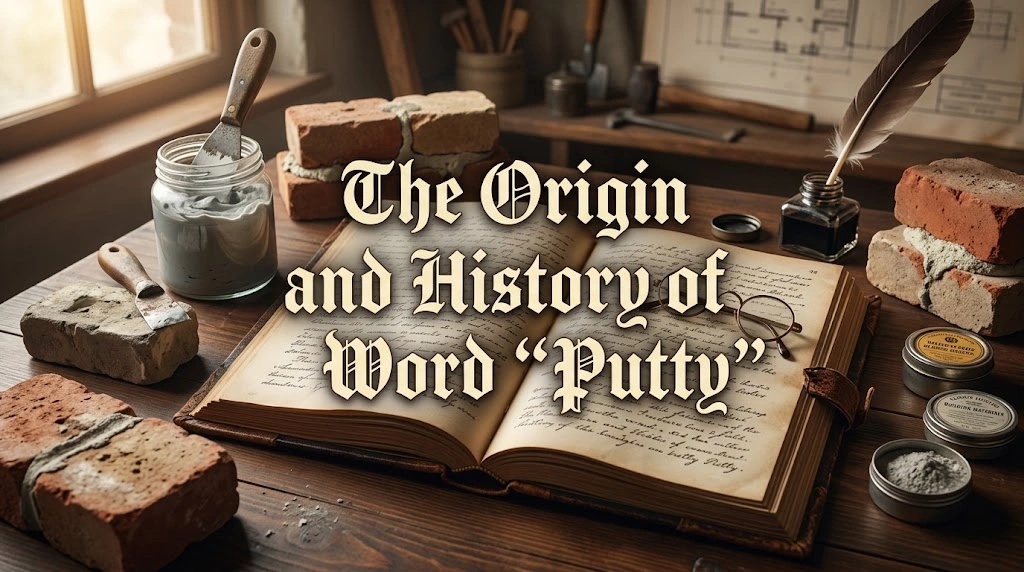
The history of putty helps explain why its spelling is firmly established.
English dictionaries trace putty back several centuries. The word has long been associated with a soft material used for filling, sealing, and glazing.
Its historical development also reflects a common pattern in English. A word can keep its basic spelling while its practical uses expand over time.
For historical background, resources such as the Online Etymology Dictionary provide information about the word’s development.
How the Meaning Expanded
Traditional putty had important applications in construction and glazing.
Over time, however, manufacturers and craftspeople developed different formulations for different purposes. Today, the word appears in a much wider range of contexts.
You might encounter:
- Window glazing putty
- Wood putty
- Wall putty
- Modeling putty
- Automotive putty
- Cleaning putty
- Specialized repair compounds
These products aren’t identical.
They share the broader idea of a workable material used for a specific filling, repair, sealing, shaping, or cleaning task.
Why the Spelling Stayed the Same
The spelling putty became established in English long before many modern product categories existed.
When new applications appeared, manufacturers generally used the existing word rather than creating an entirely new spelling.
That’s why modern expressions such as wood putty and modeling putty still use the same basic spelling.
Common Uses of Putty in Everyday English
The word appears in far more places than many people realize.
Home Improvement
Home improvement is one of the most familiar contexts for putty.
Depending on the product, putty or a putty-like compound can help fill small imperfections, prepare surfaces, or seal specific areas.
For example:
“The homeowner applied wall putty before painting the room.”
The exact preparation method depends on the wall material and the product being used.
Woodworking and Furniture Repair
Woodworkers use various fillers and putties to deal with small imperfections in wooden surfaces.
A suitable wood putty may help fill:
- Small holes
- Nail holes
- Minor dents
- Surface imperfections
- Small gaps in suitable applications
Afterward, the material may be sanded and finished according to the product’s instructions.
One important distinction is worth remembering: wood putty and wood filler aren’t always identical products.
People sometimes use the terms loosely, but their formulations and intended applications can differ.
Glass Installation
Traditional glazing putty has a long association with window glass installation.
Its role can include securing glass and forming a seal between the glass and a compatible frame.
Modern window systems may use different glazing technologies, including manufactured glazing compounds and sealants. Therefore, you shouldn’t assume that traditional glazing putty is appropriate for every modern window.
Arts and Crafts
Modeling putty can be useful for sculpting, miniature work, hobby projects, and repairs to suitable models.
Different products have different working times and curing characteristics.
For example, one modeling compound may stay flexible until heated or otherwise treated, while another may harden after mixing two components.
Technology Cleaning
Cleaning putty has become a popular term for soft cleaning compounds designed to pick up dust and debris.
It can be useful in narrow spaces that are difficult to reach with a cloth.
Still, “cleaning putty” doesn’t mean every putty-like product is safe for electronics. Follow the manufacturer’s directions and avoid forcing material into openings where it could cause damage.
Putty in Sentences: Realistic Examples
Seeing the word in context makes the spelling easier to remember.
Home Repair Examples
“The wall had several small imperfections, so we applied putty before painting.”
“Let the putty dry completely before sanding the repaired area.”
Woodworking Examples
“The woodworker used putty to fill the small nail holes.”
“After the putty cured, she sanded the surface smooth.”
Window Examples
“The old window required glazing putty around the glass.”
“The installer checked whether the glazing product was suitable for the frame.”
Modeling Examples
“The modeler used a small amount of putty to reshape the figure.”
“The modeling putty hardened after the curing period.”
Cleaning Examples
“Cleaning putty collected dust from the narrow spaces between the keys.”
“The manufacturer recommends testing the cleaning product on a small area first.”
Puddy or Putty: Common Spelling Mistakes
Several habits can lead writers toward the wrong spelling.
Mistake 1: Writing “Puddy” for the Repair Material
This is the most direct error.
If you’re talking about material used for filling, sealing, glazing, or modeling, write putty.
❌ “Apply puddy to the damaged wall.”
✅ “Apply putty to the damaged wall.”
Mistake 2: Assuming Both Spellings Are Correct
Two words can sound similar without being interchangeable.
The fact that readers understand puddy doesn’t make it the standard spelling of the material.
English contains many words whose pronunciation can encourage spelling mistakes. Familiarity with the written form matters.
Mistake 3: Depending Only on Pronunciation
Pronunciation can help you recognize a word, but it isn’t always enough to spell one.
If you hear someone mention putty, you may not immediately know whether the word ends in -ty or another spelling.
That’s where dictionaries and repeated exposure become useful.
Mistake 4: Ignoring Spell Check
Spell-checking software can catch many common errors. It isn’t perfect, though.
Names and unusual terms can confuse automated tools. Some incorrect spellings may also pass through systems if they’re recognized as words in another context.
For important writing, combine:
- Spell check
- Dictionary verification
- Context checking
- Manual proofreading
How to Remember the Correct Spelling of Putty
You don’t need a complicated mnemonic.
Use the “Two Ts” Memory Trick
Think of putty as having two Ts:
PUT + TY = PUTTY
When you picture a repair material filling a hole or smoothing a surface, connect that image with the double-t spelling.
It’s a simple visual association.
Connect Putty With Repairs
Imagine a person repairing an old window.
They have a container of PUTTY beside them.
The mental connection becomes:
Repair → filling → putty → two Ts
This method works particularly well because it connects spelling with meaning.
Practice With Short Sentences
Write a few natural sentences:
- “I need putty for the wall.”
- “The carpenter applied wood putty.”
- “The window needs glazing putty.”
- “The artist used modeling putty.”
After seeing the word repeatedly in meaningful sentences, the correct spelling becomes easier to recall.
Check a Reliable Dictionary
When you’re uncertain, don’t guess.
Merriam-Webster’s definition of putty and the Cambridge Dictionary entry for putty provide useful definitions and pronunciation information.
For historical information, the Online Etymology Dictionary is another useful reference.
How to Choose the Correct Word in Context

A quick context check can solve most puddy vs. putty questions.
Identify What You Mean
First, determine whether you’re referring to a material.
If you are, putty is the standard spelling.
If you’re referring to a person, character, nickname, or brand called Puddy, the context may require the unusual spelling.
Check the Standard Spelling
When describing a repair material, use:
putty
Not:
puddy
This applies to common phrases such as:
- Wood putty
- Wall putty
- Glazing putty
- Modeling putty
- Cleaning putty
Review the Full Sentence
Sometimes the surrounding words immediately reveal the intended meaning.
Compare:
“The carpenter used putty to fill the hole.”
with:
“Puddy is the nickname of the character.”
The first sentence describes a material. The second treats Puddy as a name.
Proofread Before Publishing
Spelling mistakes become especially noticeable in technical content.
Before publishing an article, guide, product description, or instruction, check:
- Headings
- Body text
- Image captions
- Product names
- Examples
- Tables
- FAQs
- Meta titles and descriptions
A single search through the finished document can also help.
Use your editor’s Find function to search for “puddy.” If the word appears, inspect every occurrence. It may be a mistake, or it may be an intentional proper noun.
Is “Puddy” Ever a Correct Spelling?
The answer requires context.
Puddy as a Name or Nickname
People can choose unusual spellings for names and nicknames.
If a person’s established name is Puddy, that spelling should be preserved.
Changing it to Putty simply because putty is the standard English noun would be incorrect in that particular context.
Puddy in Fiction and Popular Culture
Fictional characters can also have unconventional names.
A writer may deliberately create a character called Puddy. In such a case, the spelling is part of the character’s identity.
The important distinction is this:
A proper name doesn’t have to follow the spelling of an unrelated common noun.
Puddy in Business and Product Names
Businesses and products sometimes use creative spellings to distinguish their names.
If an official brand uses Puddy, don’t automatically “correct” it to Putty.
Check the organization’s official materials before changing the spelling.
Why Context Matters
Consider these two sentences:
“The worker applied putty around the frame.”
“Puddy appears in the company’s official product name.”
Both spellings can appear in English text. They simply don’t perform the same job.
The first is the standard common noun for the material. The second is an intentionally chosen name.
Puddy vs. Putty: A Simple Comparison
| Question | Answer |
| Correct spelling for the repair material? | Putty |
| Correct spelling for wood putty? | Putty |
| Correct spelling for wall putty? | Putty |
| Correct spelling for glazing putty? | Putty |
| Is “puddy” a standard alternative spelling of the material? | No |
| Can “Puddy” appear as a name? | Yes |
| Should a proper name’s spelling be preserved? | Yes |
| Is pronunciation enough to determine spelling? | No |
The central rule is straightforward:
Use “putty” for the material. Use “Puddy” only when that spelling is intentionally established in the specific context.
Puddy or Putty Practice Quiz
A short quiz can help reinforce the distinction.
Choose the Correct Spelling
The carpenter used ___ to fill the small holes.
- A. Puddy
- B. Putty
Answer: B. Putty
Fill in the Blank
The window required glazing ______ around the glass.
Answer: putty
Spot the Correct Sentence
A: The worker applied puddy to the wall.
B: The worker applied putty to the wall.
Answer: B
Identify the Meaning
Which sentence uses Puddy as a possible proper name?
A: The painter applied putty before painting.
B: Puddy was the nickname used by the character.
Answer: B
Final Challenge
Complete the sentence:
“Before painting the cabinet, the woodworker filled the small holes with ______.”
Answer: putty
Frequently Asked Questions About Puddy and Putty
Is “Puddy” a Real English Word?
Puddy is not the standard spelling for the material called putty. However, Puddy can appear as a name, nickname, fictional name, or other intentionally chosen term.
The context determines whether the spelling is appropriate.
Which Spelling Should I Use: Puddy or Putty?
Use putty when you’re referring to the material used for filling, repairing, sealing, glazing, or certain modeling applications.
For example:
“The wall needs putty before painting.”
What Does Putty Mean?
Putty is a workable material used for various filling, sealing, smoothing, repairing, or modeling purposes.
The specific type determines its application.
Common examples include wood putty, wall putty, glazing putty, and modeling putty.
Why Do People Spell Putty as Puddy?
The most likely reason is pronunciation-based spelling.
When people hear an unfamiliar word, they may write the letters that seem to match the sound. Typing habits and simple memory errors can reinforce the mistake.
Is Putty Used Only in Construction?
No.
Although putty has important construction and repair applications, the word also appears in woodworking, glazing, modeling, crafts, automotive repair, and cleaning products.
The exact material varies according to its intended purpose.
Is Putty the Same as Wood Filler?
Not necessarily.
People sometimes use the terms casually as though they’re interchangeable. However, wood putty and wood filler can differ in composition, flexibility, drying behavior, and intended use.
Always check the manufacturer’s instructions when selecting a product for a particular repair.
How Can I Remember the Spelling of Putty?
Remember the word as PUTTY, with two Ts.
Then connect it with a repair image:
Repair → fill → putty → two Ts
That simple association can help prevent the common puddy spelling mistake.
Key Takeaways
Here are the main points to remember:
- Putty is the standard English spelling for the material.
- Puddy is generally not an alternative spelling of that material.
- Putty can be used for filling, sealing, smoothing, repairing, glazing, and modeling, depending on the product.
- Common varieties include wall putty, wood putty, glazing putty, and modeling putty.
- Pronunciation can cause people to write puddy by mistake.
- A dictionary can confirm the standard spelling when you’re unsure.
- Puddy may still be correct when it is an established name, nickname, character name, or brand.
- Context matters when deciding whether an unusual spelling is intentional.
- The easiest spelling trick is to remember PUTTY has two Ts.
Conclusion
So, puddy or putty? If you’re talking about the material used to fill, repair, seal, glaze, or model something, the correct standard spelling is putty.
The confusion usually comes from pronunciation. When spoken quickly, putty can sound close enough to puddy that the incorrect spelling seems reasonable. Yet standard written English uses putty for the material.
You’ll encounter the word in many settings. Homeowners use wall putty, woodworkers use wood putty, traditional glazing work uses glazing putty, and hobbyists use modeling putty. Modern cleaning products can also use the word putty to describe soft compounds that collect dust and debris.
Meanwhile, Puddy can be valid when it functions as a deliberately chosen name or other proper noun. That’s why context should always guide your decision.
When in doubt, remember the simple rule:
If you mean the material, use “putty.”
And if you see Puddy used as a name, check the specific source rather than automatically changing it. A small spelling difference can completely change the role of a word in a sentence.