When you’re writing quickly, Hustle or Hussle can look like a surprisingly tricky spelling question. Both versions sound almost identical, and the difference is only one letter. Still, choosing the right form matters, especially in formal writing, professional communication, school assignments, and online content. So, is it hustle or hussle?
The standard English spelling is hustle. It can function as a verb or noun and carries several meanings, including moving quickly, working energetically, making an effort, and, in some contexts, earning money through informal methods. You’ll also see it in familiar expressions such as side hustle, hustle culture, and hustling.
The spelling hussle is generally not the standard spelling of the common English word. However, it can appear as a proper name, most famously in the stage name Nipsey Hussle. That distinction explains why some readers encounter “Hussle” and assume it must be an alternative spelling.
This guide explains hustle meaning, hustle pronunciation, hustle spelling, hustle vs hussle, common mistakes, word forms, and real examples. By the end, you’ll know exactly when to use hustle and when Hussle may be correct.
What Is the Correct Spelling: Hustle or Hussle?
If you’re referring to the ordinary English word, the correct spelling is hustle.
It contains six letters:
H-U-S-T-L-E
The spelling hussle contains two consecutive s letters and leaves out the t. That isn’t the standard spelling of the English word.
| Spelling | Standard English word? | Common use |
| Hustle | Yes | Verb and noun |
| Hussle | No, generally | Proper names or stylized names |
For example:
- Correct: I need to hustle if I want to catch the train.
- Correct: She started a side hustle after work.
- Incorrect: I need to hussle if I want to catch the train.
The important exception is proper names. If Hussle appears as someone’s established name, you should preserve that spelling.
Hustle Is the Correct Standard English Spelling
Hustle is the conventional spelling recognized in standard English dictionaries.
As a verb, it can describe moving rapidly, working hard, pushing someone to act, or obtaining something through aggressive or dishonest methods. As a noun, it can refer to energetic effort, activity, a job, or a scheme.
The exact meaning depends heavily on context.
Consider these examples:
- “We need to hustle to get there on time.”
- “She has a successful side hustle.”
- “The team won because of their defensive hustle.”
- “The salesman tried to hustle tourists out of their money.”
The same word appears in all four sentences, yet the meaning shifts.
Is “Hussle” a Word?
Hussle isn’t the standard spelling of the ordinary English word hustle.
You may still encounter it online, in entertainment, in usernames, in business names, or in other proper names. The most recognizable example is Nipsey Hussle, the stage name of the American rapper and entrepreneur Ermias Asghedom.
That doesn’t make “hussle” an alternative spelling you should use in ordinary writing.
Think of it this way:
Common English word: hustle
Established proper name: Hussle, when that is the person’s or organization’s chosen spelling
Proper names often use unusual spellings. You shouldn’t automatically change them to match standard dictionary forms.
Why “Hussle” Looks Like a Plausible Spelling
The confusion makes sense.
English contains many familiar words with double s, including class, glass, lesson, and possible. When people hear hustle, they may instinctively construct a spelling that looks more familiar to them.
Pronunciation also doesn’t clearly announce every letter.
The t in hustle is not strongly pronounced as a separate sound in normal American English. That can make the written form less obvious, particularly for people who have mostly encountered the word through conversation.
Still, the standard spelling remains hustle.
Hustle Meaning and Definition
The word hustle has several meanings. It isn’t limited to the modern idea of working hard or making money.
Hustle as a Verb
As a verb, hustle commonly means to move quickly or energetically.
For example:
“Hustle! The bus is about to leave.”
Here, the speaker is telling someone to hurry.
It can also mean to work energetically toward a goal:
“She hustled to build her small business.”
In another context, hustle can describe pressuring or persuading someone:
“Street vendors hustled tourists for sales.”
The word can even have a distinctly negative meaning when it refers to cheating, tricking, or taking someone’s money through dishonest methods.
So, don’t assume that hustle always has a positive meaning.
Hustle as a Noun
As a noun, hustle can describe energetic movement, determined effort, or a way of making money.
For example:
“The team’s hustle kept them in the game.”
Here, hustle means energetic effort.
In modern business language:
“Photography is her weekend hustle.”
In that sentence, hustle means a source of income pursued alongside other work.
The noun can also describe a dishonest scheme:
“The whole thing was a hustle.”
Context does most of the heavy lifting.
Hustle as an Informal or Slang Expression
In casual American English, hustle often carries a motivational tone.
Someone might say:
“Keep hustling.”
That usually means keep working, keep trying, and keep pursuing your goals.
You’ll often see the word in discussions about:
- Entrepreneurship
- Freelancing
- Sports
- Career development
- Sales
- Creative work
- Personal ambition
- Extra income
However, hustle has a long history of more negative meanings too. That’s why context matters.
Hustle vs. Hussle: Key Differences
The simplest distinction is straightforward:
Hustle is the standard English word. Hussle is generally not.
| Feature | Hustle | Hussle |
| Standard spelling | Yes | No |
| Dictionary English word | Yes | Generally no |
| Verb | Yes | No |
| Noun | Yes | No |
| Means work hard | Yes | No |
| Means move quickly | Yes | No |
| Used in “side hustle” | Yes | No |
| Can be a proper name | Yes | Yes |
| Suitable in standard writing | Yes | Only when referring to the proper name |
Quick Rule to Remember
Use this simple rule:
If you mean the English word, write “hustle.”
If you’re referring to someone whose established name is spelled Hussle, keep the name unchanged.
For example:
- I need to hustle. ✅
- She has a side hustle. ✅
- The players showed great hustle. ✅
- Nipsey Hussle was a stage name. ✅
- I need to hussle. ❌
How to Pronounce Hustle
The standard pronunciation of hustle is approximately HUSS-uhl.
The word has two syllables:
hus-tle
The t isn’t pronounced as strongly as it appears in spelling. That’s one reason the word can create spelling confusion.
When you say the word naturally, it may sound almost like “hussle.” However, pronunciation doesn’t change the standard written form.
This is a useful reminder:
Words don’t always spell exactly the way they sound.
English contains many examples of this. That’s why relying entirely on pronunciation can lead to spelling mistakes.
Read More: Writing or Writting? Correct Spelling, Meaning, Grammar Rule, and Examples
Why Is Hustle Spelled With One “S”?
The spelling hustle follows the established form of the word in English.
Its letters are arranged as:
H + U + S + T + L + E
The t is important even though it isn’t particularly prominent in everyday pronunciation.
Writing hussle removes the t and adds an extra s. That produces a different spelling that doesn’t represent the standard English word.
The Spelling Pattern in Hustle
Look closely at the middle of the word:
H U S T L E
The sequence STL is easy to overlook when you’re writing quickly.
That’s especially true because English pronunciation often smooths consonant combinations in ordinary speech.
A useful visual memory trick is to remember:
HUSTLE has “ST” in the middle.
If you’re unsure, pause and check for that T.
Why English Spelling Can Be Misleading
English spelling developed from several linguistic sources over centuries. As a result, pronunciation and spelling don’t always line up neatly.
You can hear a word perfectly and still spell it incorrectly.
That’s what happens with hustle. Someone who knows the spoken word may write hussle because the t isn’t obvious in conversation.
The solution isn’t to spell according to sound. Instead, remember the established written form:
Hustle.
The Meaning of Hustle in Different Contexts
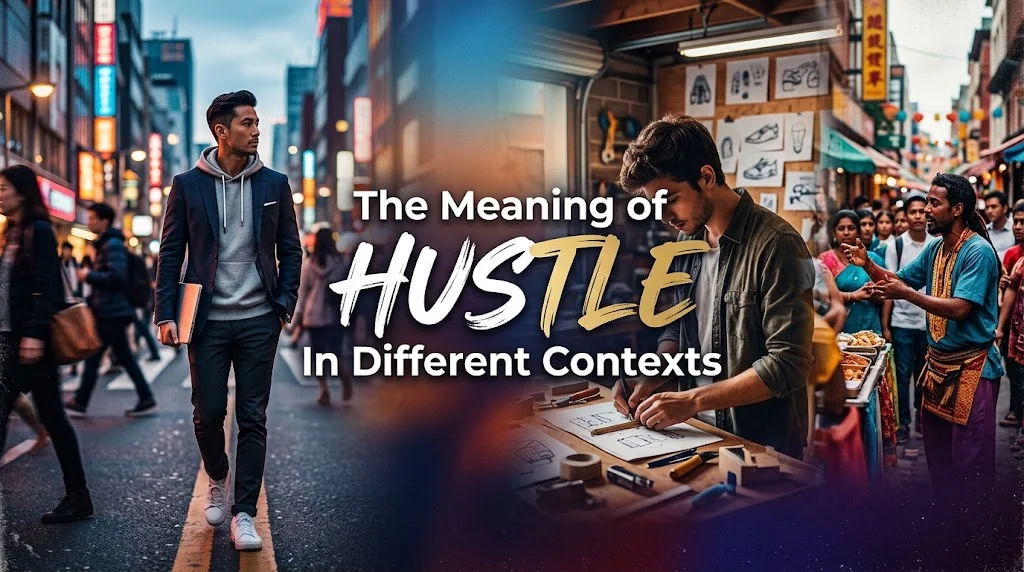
One of the most interesting things about hustle is how much its meaning changes depending on the situation.
Hustle at Work
When someone says:
“We need to hustle.”
They usually mean:
We need to work quickly and efficiently.
The expression often suggests urgency.
For example:
“The deadline is tomorrow, so everyone needs to hustle.”
Here, the word doesn’t necessarily imply stress or desperation. It simply emphasizes energetic action.
Side Hustle
A side hustle is work or a small business someone pursues in addition to their main job or primary source of income.
Common examples include:
- Freelance writing
- Graphic design
- Online tutoring
- Photography
- Selling handmade products
- Web development
- Consulting
- Driving or delivery work
- Creating digital products
For example:
“She works full time but runs a photography side hustle on weekends.”
The phrase has become especially common in discussions about personal finance and entrepreneurship.
Hustle in Sports
In sports, hustle usually has a positive meaning.
A player who hustles doesn’t necessarily have the most natural talent. Instead, that player gives consistent effort.
A coach might say:
“His hustle changed the game.”
That could refer to chasing a loose ball, making a difficult defensive play, sprinting back into position, or continuing to compete when the outcome looks uncertain.
In this context, hustle is closely related to effort, energy, and determination.
Hustle in Business and Entrepreneurship
Business culture often uses hustle to describe persistence.
A person who “hustles” might:
- Contact potential clients
- Build a business after work
- Look for new opportunities
- Network with customers
- Improve a product
- Sell services
- Pursue multiple income streams
The term can sound inspirational.
However, working constantly isn’t automatically productive. The modern phrase hustle culture has sparked criticism because relentless productivity can encourage people to treat exhaustion as success.
Hustle as a Scam or Deception
Historically and colloquially, hustle can have a darker meaning.
If someone says:
“He hustled me.”
They may mean:
“He tricked me or cheated me.”
Likewise, a hustle can describe a scheme designed to make money, particularly through deception.
Compare these two sentences:
- “She hustles to build her business.”
- “The scammer hustled tourists.”
The spelling stays the same. The meaning changes because the context changes.
Hustle in Modern English and “Hustle Culture”
The modern popularity of hustle goes far beyond its basic dictionary meanings.
What Is Hustle Culture?
Hustle culture describes a mindset that places heavy emphasis on constant work, productivity, ambition, and achievement.
You’ll often see ideas such as:
- Work harder
- Start a side business
- Wake up earlier
- Maximize productivity
- Build multiple income streams
- Turn hobbies into businesses
Some people find these ideas motivating.
Others argue that hustle culture can glorify overwork and make people feel guilty when they rest.
The important point is that hustle culture is a modern phrase built around an established English word. It doesn’t create a new spelling.
Is Hustle Always a Positive Word?
No.
Its tone depends on context.
| Context | Likely meaning | Tone |
| Sports | Energetic effort | Positive |
| Career | Hard work | Usually positive |
| Side business | Extra income | Positive/neutral |
| Urgent movement | Hurry | Neutral |
| Scam | Deception | Negative |
| Hustle culture | Relentless productivity | Mixed |
Understanding the context prevents misinterpretation.
Hustle in Popular Culture and Proper Names
The spelling Hussle has become especially recognizable because of popular culture.
Why You May See “Hussle” Online
You may encounter Hussle in:
- Artist names
- Usernames
- Brand names
- Company names
- Titles
- Creative projects
- Social media accounts
A proper name doesn’t have to follow the standard spelling of a dictionary word.
That’s why you shouldn’t automatically replace Hussle with hustle whenever you see it.
Nipsey Hussle and the Spelling “Hussle”
One of the best-known examples is Nipsey Hussle, the stage name of American rapper and entrepreneur Ermias Asghedom.
His chosen name uses Hussle, not Hustle.
That spelling is therefore correct when you’re writing his name.
But this doesn’t mean hussle has become an accepted alternative spelling of the everyday English verb.
Compare:
“Nipsey Hussle was an influential artist.”
with:
“You need to hustle to finish the project.”
Both spellings are correct in those sentences because they’re performing different jobs.
The first is a proper name. The second is a standard English word.
Common Hustle and Hussle Mistakes
Mistake 1: Writing “Hussle” When You Mean “Hustle”
This is the most common mistake.
❌ “I need to hussle to finish this.”
✅ “I need to hustle to finish this.”
The easiest correction is to remember the T.
Mistake 2: Assuming the Pronunciation Determines the Spelling
The spoken word can sound close to “hussle.”
That doesn’t mean hussle is the correct spelling.
English contains many words whose written forms aren’t obvious from pronunciation alone.
When spelling matters, rely on the established written form.
Mistake 3: Confusing a Proper Name With a Common Word
Seeing Hussle in a famous name can make the spelling look legitimate in every context.
It isn’t.
The distinction is simple:
- Hustle = standard English word
- Hussle = potentially a proper or stylized name
Mistake 4: Using the Wrong Form in Formal Writing
Professional writing should use hustle when you mean the ordinary word.
This includes:
- Business emails
- Reports
- School assignments
- Articles
- Resumes
- Academic writing
- Marketing copy
For example:
❌ “He knows how to hussle for new clients.”
✅ “He knows how to hustle for new clients.”
Mistake 5: Treating Every Appearance of “Hussle” as a Typo
There’s one important caveat.
If Hussle is part of a person’s official name, company name, title, or brand, don’t change it simply because hustle is the standard English word.
Proper names deserve their original spelling.
Hustle Examples in Sentences
Seeing the word in context makes its different meanings easier to understand.
Examples of Hustle as a Verb
- “We need to hustle if we’re going to catch the train.”
- “She had to hustle to find new customers.”
- “The players hustled back on defense.”
- “He hustled all day to finish the renovation.”
- “Don’t hustle customers into buying something they don’t need.”
Notice how the meaning shifts from moving quickly to working hard and then to pressuring someone.
Examples of Hustle as a Noun
- “His hustle impressed the entire team.”
- “Photography became her weekend hustle.”
- “The players showed tremendous hustle.”
- “The deal turned out to be a hustle.”
- “Her entrepreneurial hustle helped grow the company.”
Examples With Side Hustle
- “My side hustle helps cover my monthly expenses.”
- “He started a tutoring side hustle during college.”
- “Her baking business began as a small side hustle.”
- “A successful side hustle can eventually become a full-time business.”
Incorrect vs. Correct Examples
| Incorrect | Correct |
| I need to hussle today. | I need to hustle today. |
| She started a side hussle. | She started a side hustle. |
| We should hussle to finish. | We should hustle to finish. |
| His hussle impressed the coach. | His hustle impressed the coach. |
| Nipsey Hustle | Nipsey Hussle |
The final example is different because Hussle is part of the artist’s established stage name.
Hustle Synonyms and Related Words
The best synonym depends on which meaning you’re using.
Synonyms for Hustle Meaning “Work Hard”
- Strive
- Grind
- Work hard
- Push
- Apply yourself
- Labor
- Persevere
- Put in the effort
For example:
“She hustled to build her company.”
could become:
“She worked hard to build her company.”
The meaning remains similar, although hustle often sounds more energetic and informal.
Synonyms for Hustle Meaning “Move Quickly”
Depending on the context, alternatives include:
- Hurry
- Rush
- Speed up
- Move quickly
- Scurry
For example:
“Hustle! We’re late.”
could become:
“Hurry! We’re late.”
Related Terms
Several common expressions come directly from hustle:
- Hustling
- Hustler
- Side hustle
- Hustle culture
- Hustle mentality
These expressions all retain the same basic spelling.
Hustle Word Forms and Grammar

Hustle follows ordinary English verb patterns.
| Grammatical form | Word | Example |
| Base verb | hustle | I hustle every morning. |
| Third-person singular | hustles | She hustles for new clients. |
| Present participle | hustling | He is hustling today. |
| Past tense | hustled | They hustled to finish. |
| Noun | hustle | His hustle paid off. |
| Agent noun | hustler | He’s a skilled hustler. |
Hustle vs. Hustling
When -ing is added, the word becomes hustling.
The spelling isn’t:
❌ hussling
It’s:
✅ hustling
For example:
“She is hustling to grow her business.”
This spelling follows the standard formation of the word.
Hustle vs. Hustled
The past-tense form is hustled.
For example:
“They hustled to the airport.”
Again, the t remains visible.
That makes hustle, hustled, and hustling useful spelling patterns to memorize together.
How to Remember the Correct Spelling
A simple memory trick can save you from repeatedly making the same mistake.
The Simple Memory Trick
Think:
HUS + TLE = HUSTLE
The key is the T.
You can also connect the word with the phrase:
Hustle means “move” or “work,” and hustle has a T.
When you write the word, deliberately picture:
HUS-TLE
That small pause helps reinforce the correct spelling.
A Quick Spelling Test
Before writing the word, ask:
Am I talking about the ordinary English word or a specific name?
If you’re talking about effort, movement, work, business, or deception, use:
HUSTLE
If you’re reproducing a person’s or organization’s established name, preserve the spelling they use.
Hustle vs. Hussle: Quick Comparison Chart
| Question | Answer |
| Which spelling is standard? | Hustle |
| Is hustle a verb? | Yes |
| Is hustle a noun? | Yes |
| Is hussle the standard English spelling? | No |
| Can Hussle appear as a proper name? | Yes |
| Does hustle mean only “work hard”? | No |
| Is “side hustle” standard English? | Yes |
| Can hustle have a negative meaning? | Yes |
| Is hustling spelled with double s? | No |
| Does hustle contain a “t”? | Yes |
Quick Quiz: Hustle or Hussle?
Test yourself before moving on.
Choose the correct form in each sentence.
- “I need to ___ if I want to finish this today.”
- “She launched a small side ___.”
- “The team’s ___ helped them win.”
- “Nipsey ___ was his stage name.”
- “He was ___ to find new clients.”
Answers
- Hustle
- Hustle
- Hustle
- Hussle
- Hustling
The fourth answer is different because Hussle forms part of a proper name.
Frequently Asked Questions About Hustle or Hussle
Is “Hussle” Ever Correct?
Yes, but generally not as the standard spelling of the common English word. Hussle can be correct when it appears as a person’s name, brand, or another established proper name.
Is “Hussle” a Misspelling of “Hustle”?
Usually, yes, when someone intends to write the ordinary English word. The standard spelling is hustle, with one s and a t.
Why Do People Spell Hustle as Hussle?
The pronunciation can make the spelling confusing because the t isn’t strongly pronounced in everyday speech. People may therefore write the word based on how it sounds.
Is Hustle a Real English Word?
Yes. Hustle is a well-established English word that functions as both a verb and a noun. It has several meanings related to movement, effort, work, pressure, and deception.
What Does Hustle Mean in Slang?
In informal language, hustle often means working hard, pursuing opportunities, making money, or taking energetic action. However, it can also refer to deceptive activity depending on the context.
What Does Side Hustle Mean?
A side hustle is an additional job, business, or income-generating activity pursued alongside a person’s primary work or other main commitment.
Is Hustle a Positive or Negative Word?
It can be either. In sports or career discussions, hustle often suggests determination and effort. In phrases involving scams or deception, it can have a negative meaning.
How Do You Pronounce Hustle?
Hustle is commonly pronounced approximately HUSS-uhl in American English. The written t isn’t strongly pronounced as a separate sound.
What Is the Past Tense of Hustle?
The past tense is hustled.
For example:
“She hustled to finish the project before the deadline.”
What Is the Difference Between Hustle and Hustling?
Hustle is the base form, while hustling is its present participle and gerund form.
For example:
- “I hustle every day.”
- “I am hustling today.”
Is “Hussle” Correct When Used in a Person’s Name?
Yes. If Hussle is part of someone’s established name, it should be written exactly that way. Nipsey Hussle is a well-known example.
How Can You Remember the Spelling of Hustle?
Remember that hustle contains a T:
HUS-TLE
Don’t replace the st sequence with ss.
Conclusion
When choosing between Hustle or Hussle, the answer is straightforward: hustle is the standard spelling of the English word.
Use hustle when you’re talking about working hard, moving quickly, making an effort, earning money, or pressuring someone. It can work as both a noun and a verb, and its meaning changes with context.
The spelling hussle generally shouldn’t replace hustle in ordinary English writing. However, proper names follow their own established spellings. That’s why Nipsey Hussle is correctly written with Hussle.
The easiest way to remember the difference is simple:
Hustle has a T.
So, if you’re writing about a side hustle, describing someone’s hustle, or telling someone to hustle, choose hustle. Save Hussle for cases where that exact spelling belongs to a proper name or other intentional name.